Saturday, March 26, 2011

Gabrielle Wang - Authour Interview Series


Gabrielle Wang is an award-winning author and illustrator born in Melbourne of Chinese heritage. Her latest book is Meet Poppy, the first in a series of junior novels about a girl growing up during the Victoran gold rush.

What authors/books did you read as a child? When did you first discover your love of books?

I read a lot of dog and horse books when I was young. I was crazy about them – White Fang, Call of the Wild, Green Grass of Wyoming, My Friend Flicka, Lassie Come Home, to name just a few. Of course I loved Enid Blyton, especially the Secret Seven and Famous Five series. My mother instilled in me a love of books. When we were small she would read to us every night. We had a library of good adult books in our house that I read as a teenager – DH Lawrence, Gunther Grass, Raymond Chandler, Ray Bradbury, John Wyndham, Herman Hesse…. But the one book that I will always remember with love and affection is The Magic Faraway Tree. And I still have my original copy.

When did you first realise you were a writer? What do you hope your readers will take away with them from reading your books?

I didn’t discover that I loved to write until I was in my thirties. I was never good at writing at school. In fact I failed Year 12 English so I had to repeat the year again in order to get into Graphic Design at RMIT. All my life I wanted to be an artist. It wasn’t until later that I became interested in writing and illustrating picture books. I sent a few manuscripts off to publishers but was unsuccessful and gave it away. But the dream was always there. I hope my words transport, inform, provoke and evoke. I hope my reader catches a glimpse into another culture and sees the world through the eyes of someone who may be different.

Do you find it difficult to read purely for pleasure? Does everything you read come under your ‘writer’ microscope?

I always read for pleasure unless it is for research. I don’t particularly like researching but a book can’t survive without it. I’ve read too many novels where the author has failed in this area. If a book doesn’t grab me from the start, I won’t persevere with it. There are too many good books out there that I want to spend my time with. But as a writer, part of me is still on the job. I might be enjoying the characters and the plot, but ideas for my own stories are always snapping in my brain.

Do you have to avoid reading certain types of fiction while writing your own? Does what you read while writing have an effect on what you write? In what way?

I tend not to read a book that has the same subject matter as the one I’m working on. For example, when I was writing The Hidden Monastery about a boy and a mythical Chinese creature, I steered away from books about dragons like Carole Wilkinson’s Dragonkeeper.
As I mentioned above, sometimes a paragraph or page in the book I’m reading will spark off a completely new idea that I might be able to use in my WIP.*

Name five authors or books that have influenced or inspired your own writing in some way?

The Magic Faraway Tree by Enid Blyton. I love the way this book is set in the real world but travels into other dimensions. Most of my books do the same and I owe it all to Enid. The Chuangzi by Chuangzi and Tao de Jing by Laozi. I often use the way of the Tao in my writing. Any book by Ray Bradbury and Raold Dahl for their inventiveness, boundless imagination and twists.

If you were travelling and were told you could only take one book with you, what book would it be and why?

Ursula Le Guinn’s wonderful adaptation of the Tao De Jing by Laozi. I like the way Le Guinn has interpreted this incredible book.

What makes a book ‘too good to put down’?

Unique voice, great characters, exciting plot, beautiful lyrical prose, descriptions, philosophical ideas.

What makes you put down a book without finishing it?

Boring, unoriginal, no layering, one dimensional characters, poorly researched, endless rambling instead of keeping to the story.

Do you have a favourite author? Who is it and what is it about their writing that draws you to them?

I have too many to mention. I have just finished reading The Elegance of the Hedgehog by Muriel Barbery and really really enjoyed it. I loved the voice, the ideas and the story. I do like Paul Auster and Haruki Murakami.

If you had to list them, what would be your ‘top ten’ reads of all time (excluding the classics) and why?

I would like to rephrase this question to ‘If you had to list them, what are some of your favourite books?

The Book Thief by Marcus Zusak
The World of Nasruddin by Idries Shah
The Windup Girl Chronicle by Haruki Murakami
Cloud Street by Tim Winton
The Arrival by Shaun Tan
The Underneath by Kathi Appelt
The Alchemist by Paolo Coelho
The Teachings of Don Juan by Carlos Castenada
Atonement by Ian McEwan
Kahlila and Dimna – Tales of Friendship and Betrayal

What was your 2010 ‘best read’? What was it that made it number one?

The Underneath by Kathi Appelt. This is a children’s book. I loved Appelt’s beautiful lyrical writing and the ancient feel of this story and the steamy setting of the everglades.

What do you think of the non-traditional publishing methods – eBooks etc? Do you think the new technology will encourage more people to read? Do you think there’s a future for print books?

I always have an audio book on the go. This way I can read several books at once. I tend to zoom through an audio book because I can listen to it while walking the dog or cooking the dinner. And it’s easy on the eyes. The book beside my bed is always a slow read no matter what it is. I have an ipad and have downloaded a few books onto that. But for me it will never replace the simple elegance and feel of a ‘real’ book. On the plus side - More people might read because young people are used to interacting with screens, ebooks are cheaper and have less impact on the environment. I think print books will eventually die out but it will take a while and thankfully not be in my lifetime.

In her twenties Gabrielle went in search of her roots living in both China and Taiwan where she studied Chinese language and painting. Her stories are a blend of Chinese and Western culture with a touch of fantasy. She has twice won the Aurealis Award for Best Children’s fiction, and her books have been named Notable Books in the Children’s Book of the Year Awards, and shortlisted for the Queensland Premier’s Literary Awards. She is published internationally in the UK, US, South America, Korea and China. Her books include The Garden of Empress Cassia, The Lion Drummer, A Ghost in My Suitcase and Little Paradise.

You can read more about Gabrielle at http://www.gabriellewang.com/

(* work in progress)

Thursday, March 17, 2011

Kerry Greenwood - Author Interview Series


Kerry Greenwood's Phryne Fisher series began in 1989 with Cocaine Blues. Kerry has written sixteen books in this series with no sign yet of Miss Fisher hanging up her pearl-handled pistol. Kerry says that as long as people want to read them, she can keep writing them.

What authors/books did you read as a child? When did you first discover your love of books?


I learned to read when I was three beause I had a favourite book, Katie the Kitten - a golden book - and my mother read it to me so many times that I coud recite it and associated the words spoken with the ones on the page. "Katie the Kitten a small tiger cat is asleep in a hall in a ball in a hat..." Then I read EVERYTHING including the backs of cornflakes packets. My favourites were Milne, Lewis Carroll, Kipling, C S Lewis, Doctor Doolittle, Elizabeth Goudge... and everyone else.

When did you first realise you were a writer? What do you hope your readers will take away with them from reading your books?

I wrote my first novel when I was sixteen. I just love writing books. I hope to amuse my readers, to take them away to another place, where there will always be a happy ending.

Do you find it difficult to read purely for pleasure? Does everything you read come under your 'writer' microscope?

To a certain extent, particularly detective stories. But I am very pleased when a writer convinces me and seduces me into a false solution. I enjoy the artistry and the journey.

Do you have to avoid reading certain types of fiction while writing your own? Does what you read while writing have an effect on what you write? In what way?

Yes, I never read detective stories while I am writing one, due to the possibilites of cross-contamination. I stick to other genres while I am writing. I haven't had any bad experiences in this way, because I avoid the possibility.

Name five authors or books that have influenced or inspired your own writing in some way?

Dorothy Sayers, my hero. Wrote the best detective stories in my genre.
J R R Tolkein, who wrote the definitive fantasy, the definitive second creation, to which I can only aspire.
P G Wodehouse, for his skilled, ingenious and very funny use of language.
Leslie Charteris, who wrote The Saint and perfected the caper novel.
Joan Aiken, who invented alternate histories.

If you were travelling and were told you could only take one book with you, what book would it be and why?

The Lord of the Rings by J R R Tolkein. Or if it has to be non fiction, The Histories by Herodotus.

What makes a book 'too good to put down'?

Pace, ingenuity, clarity of character.

What makes you put down a book without finishing it?

Unimaginative characters, boring exposition, too much description, (Walter Scott, I see you!) and predictable plot.

Do you have a favourite author? Who is it and what is it about their writing that draws you to them?

Tolkien again. It's the most perfect sub-creation. You believe that there are hobbits, or have been hobbits. I like to believe that, too.

If you had to list them, what would be your 'top ten' reads of all time (excluding the classics) and why?

Can't exclude classics, sorry.

Bleak House by Charles Dickens - the book which changed the law, complex, fascinating, passionate.
The Lord of the Rings by J R R Tolkein - for reasons already cited.
The Wolves of Willoughby Chase by Joan Aiken - another perfect sub creation and a romping good read.
Alice in Wonderland by Lewis Carroll - the original psychedelic fantasy.
The Beast Master by Andre Norton - clever, deeply felt YA adventures in space-time.
A Morbid taste for Bones by Ellis Peters - another perfect re-creation of another time.
Nova by Samuel Delaney - epic in future form, redolent with other myths.
When Things Fall Apart by Ron Goulart - who can be funny about dystopias.
Goblin Reservation by Clifford Simak - I love his dry, constrained style.
The Christening Quest by Ann Scarborough - witty, ingenious, intelligent fantasy.

What do you think of the non-traditional publishing methods - eBooks etc? Do you think the new technology will encourage more people to read? Do you think there's a future for print books?

Yes, as a niche, and because people will always like to have a book or two around the house (they do not need batteries). Also it is not a good idea to read ebooks in the bath. I suspect that printed books will become art objects and plain everyday novels will be something you download. Fine with me.

When Kerry is not writing, she works as a locum solicitor for the Victorian Legal Aid. She is also the unpaid curator of seven thousand books, three cats (Attila, Belladonna and Ashe) and a computer called Apple (which squeaks). She can detect second-hand bookshops from blocks away and is often found within them. For fun Kerry reads science fiction/fantasy and detective stories.

You can find out more about Kerry here.

Sunday, March 6, 2011

Kate Forsyth - Author Interview Series


Kate Forsyth's latest book is The Wildkin’s Curse, a tale of high adventure and true love for readers aged 12+. It is the sequel to her award-winning novel The Starthorn Tree.

What authors/books did you read as a child? When did you first discover your love of books?

I could read before I went to school, and was already devouring books as fast as I could get my greedy little hands on them. I remember loving my first day of school because - as all the other kids began to be taught the alphabet - I got to curl up on a beanbag and read my way through the class library. They had to bring in another box for me, and I remember thinking, ‘Oh I love school! I get to read all day.’ Books have always been a source of enchantment and wonder to me. I spent a lot of time in hospital as a child, and books were my only escape from the pain and fever and loneliness. By the time I left primary school I had read every book in the library, and my local council library had issued me with special permission to read the books in the adult section as I’d read everything in the children’s!

When did you first realise you were a writer?

I don’t remember a time when I didn’t have a desperate longing to be a writer. It was my one ambition, all of my life, and at every crossroads I’ve always taken the road that would lead me towards that dream. It’s not always been easy, particularly when I was young and poor, but I feel justly rewarded now that I’m an established writer with a body of award-winning and internationally published work. I feel I’m living the life I always dreamed of, and that’s a joy all in itself.

What do you hope your readers will take away with them from reading your books?

I have such high ambitions of every book I write! I want my readers to be totally absorbed in the world I’ve created, as if they have stepped through a magical door into another land. I want them to laugh and gasp and cry and shiver. I want them to finish reading my book with that sting of tears in their eyes, that lump in the throat, that means they have been truly moved. I want them to look up from the book and see our own world with a clearer, brighter gaze, with a new sense of astonishment and awe. I want them to feel as if the boundaries of the known universe have been pushed out, and their own sense of the possible enlarged. I want them to think about my book in the days and weeks and years that follow, and go back to it and read it again with the feeling of meeting an old and trusted friend. I want them to push a copy into the hands of everyone they meet and say, ‘you must read this! It’s wonderful!’ I want them to treasure my book, and give it to their own children and grandchildren, and forever after list it as one of their all-time favourite books. I want them to divide the world into people who love it, and so are clearly kindred spirits, and people who don’t, who are obviously lacking some kind of magic in their soul. Sigh! Wouldn’t all that be heavenly?

Do you find it difficult to read purely for pleasure? Does everything you read come under your ‘writer’ microscope?

No, I read for pleasure all the time. It’s one of the great sources of joy in my life. I do find that my reading is shaped and affected by what I’m writing – for example, when I was working on The Gypsy Crown I was utterly obsessed with the English Civil War and Oliver Cromwell and the history and culture of the Romanys, and so I found it very hard to read anything outside that area of interest. As soon as I finish writing a book, I start catching up on all the books I wasn’t able to read during the writing process. I’ll have books stockpiled, sometimes for years, waiting for me to read without any underlying purpose. I always read with a critical eye – a sign of a good book to me is one that works so beautifully that I relax into it and just enjoy it.

Do you have to avoid reading certain types of fiction while writing your own? Does what you read while writing have an effect on what you write? In what way?

I always read a lot, but the books I choose to read are always determined by what I’m writing. For example, I’m working on a historical novel now which entwines the fairytale of Rapunzel with the true life story of one of its earliest tellers, the French writer Charlotte-Rose de Caumont de la Force. So I’m reading a lot of fairytale retellings, and a lot of books set in, or about, 17th century France, and a lot of novels that parallel two different historical periods, or two different narratives. My reading is ranging from popular biographies, like Antonia Fraser’s book on Louis the Fourteenth and the women in his life; to serious scholarship, books with titles like The Devotees: Women and Church in Seventeenth Century France; to The Empress of Icecream by Anthony Capella, a recent novel about a confectioner at the court of Louis XIV who falls in love with Louise de Keroualle, who was sent to England to try and seduce Charles II, while spying for the French king. I’ll also read a lot of murder mysteries and romances and memoirs set in France; anything that helps me imagine a place and a time and a culture. I also belong to two Book Clubs and so need to read books for those – I do find it hard, though, if I’m in the midst of an obsession about 17th century France and have to read a book set in contemporary Australia!

Name five authors or books that have influenced or inspired your own writing in some way?

Only five? There are so many wonderful writers! A few favourites from different stages of my reading life:

C.S. Lewis and the Narnia books – these books were among the first I ever read all on my own and the very word ‘Narnia’ has the power to make me shiver with delight.
Enid Blyton and the Famous Five – how I longed for adventure when I was a child! I still wish I lived in a house with a secret passage, that led somewhere mysterious and exciting.
The Bronte sisters - I loved the whole story of the girls sitting and scribbling by candlelight and creating these astonishing books and poems. I like to re-read their books every few years.
Tad Williams and his fantasy series Memory, Sorrow & Thorn – I had not read any fantasy since I was a child and these books led me back to tales of magic and adventure and danger, which encouraged me to write my own fantasy, Dragonclaw, which was my first published book. Tracey Chevalier – she is one of my absolute favourite writers. I love the perfect balance of plot, character and place, and I love the way she brings history to life.

If you were travelling and were told you could only take one book with you, what book would it be and why?

I could never do that! I’m so afraid of being stuck in an airport or a foreign hotel without a book to read that I always take about 5 or 6. And I then read them all in the first few days and have to go & buy a whole pile of new ones. And since I can never get rid of a book I’ve loved, I post them all home to myself, spending hundreds on postage. Plus I get very sore shoulders from heaving them all around with me. I’m travelling to France and Italy next year to research the book I’m writing at the moment, and I plan to buy an e-book reader and download a hundred books on to it before I go!

What makes a book ‘too good to put down’?

A fascinating plot full of suspense and surprise, compelling writing, characters that you really care about, a world that has been so beautifully crafted it feels real. Easy!

What makes you put down a book without finishing it?

A boring plot, bland writing, flat characters, a beige setting.

Do you have a favourite author? Who is it and what is it about their writing that draws you to them? If you had to list them, what would be your ‘top ten’ reads of all time (excluding the classics) and why?

I have so many favourite writers! I actually have a list of them on my website at http://www.kateforsyth.com.au/favouritewriters.htm. Here are my ABSOLUTE top ten favourite contemporary writers – Geraldine Brooks, Tracey Chevalier, Sarah Dunant, Joanne Harris, Kim Wilkins, Kate Morton, Susan Vreeland, Lian Hearn, Cornelia Funke, and Eva Ibbotson. The reason why they are my favourites is because they have never let me down – each and every book they write is wonderful, surprising, and compelling. I will rush to the bookshop to buy one of their books and then I will curl up with it with an immense sense of anticipation and I will read every word with pleasure. Joanne Harris is the only one that this is not completely true about – her last two books have not made my heart sing – but she deserves her place in my list because of Chocolat and Five Quarters of the Orange which I just adore. Their books have everything I want in a book – history, art, suspense, mystery, magic, romance, heartbreak.

What was your 2010 ‘best read’? What was it that made it number one?

The best book of 2010 for me was The Pillars of the Earth by Ken Follett. It was absolutely stupendous. The only reason he’s not on my list of Top 10 favourite Writers of all time is that I haven’t yet read any of his other books yet. I’ve bought them and I plan to read them just as soon as I can. Other stand-outs for me, in adult fiction, were The Distant Hours by Kate Morton and The Rose of Sebastopol by Katharine McMahon. Best crime novel was Heartstone by C.J. Sansom, and The Weed that Strings the Hangman’s Bag by Alan Bradley. Best children’s book was absolutely Dark Angels by Katherine Langrish, though I also enjoyed A Curse as Dark as Gold by Elisabeth C. Bunce.

What do you think of the non-traditional publishing methods – eBooks etc? Do you think the new technology will encourage more people to read? Do you think there’s a future for print books?

I think e-books are a wonderful innovation that will open up reading to many people who might otherwise find books heavy, inconvenient, expensive, or just too daunting. There’s no doubt it will change the way many people read – but so too did the printing press. I think books published in the traditional way will become collector’s items, sought out because of their beauty and rarity. I think signed books will become a lot more valuable, and that publishers will begin to do limited editions of certain books remarkable for their packaging and presentation. In other words, start collecting first edition, signed copies of books now!

Kate Forsyth is the internationally bestselling author of more than twenty books for children and adults, including The Puzzle Ring, The Gypsy Crown, The Starthorn Tree, and the bestselling fantasy series ‘The Witches of Eileanan’ and ‘Rhiannon’s Ride’. Since her first novel was named a Best First Novel of 1998 by Locus Magazine, she has been shortlisted for numerous awards, including a CYBIL Award in the US and the Surrey Book of the Year award in Canada. In 2007, Kate became the first author to win five Aurealis awards in a single year when Books 2-6 in the Chain of Charms series were jointly awarded the 2007 Aurealis Award for Children’s Fiction. Book 5: The Lightning Bolt was also named a Notable Book for 2007 by the Children’s Book Council of Australia. Her books have been published in 13 countries around the world.

You can read more about her at http://www.kateforsyth.com.au/

Sunday, February 27, 2011

Shirley Marr - Author Interview Series


"Shirley Marr is an accountant by day and a masked writer by night. That's when she becomes her true self — Writer Woman, with her trusty sidekick, BetaGirl." Fury (Black Dog Books) is her first novel.

What authors/books did you read as a child? When did you first discover your love of books?

When I first arrived in Australia at the age of six, I couldn’t write or read a word of English. I could only understand a rudimentary amount of spoken English. I remember the very first time I sat down with my classmates in front of our teacher and she read to us Enid Blyton’s The Magic Faraway Tree. Although I could only understand some of it, I remember that moment being so magical that it cemented my determination to learn how to read. So hence began my love affair with books, I slowly devoured every single book by Enid Blyton. The Secret Seven being my favourite series.

When did you first realise you were a writer? What do you hope your readers will take away with them from reading your books?

At first, I thought I was a drawer. But as my English improved, and I shifted my form of communication from visuals to word, I realised I was actually a better writer! I realised this is primary school. My novel is called Fury and I hope my readers are left with the feeling of what that emotion really means after having read the story. I hope it lingers in their memory.

Do you find it difficult to read purely for pleasure? Does everything you read come under your ‘writer’ microscope?

Yes, it is true - everything comes under my microscope! But I know when I find a perfect read - my mind stops trying to pick everything apart and I just go for the ride!

Do you have to avoid reading certain types of fiction while writing your own? Does what you read while writing have an effect on what you write? In what way?

Surprisingly, I don’t avoid anything while I write – I write every single day, so I believe in living my life! I read what I want to read at any point in time. I believe life in general has an effect on what I write and of course books do as well. Anyway, when you think of it, every book written is derivative of what came before, so I don’t try and shy away from it. In fact, I believe in acknowledging and reflecting in my work the books I like – I’m very fond of pop culture referencing!

Name five authors or books that have influenced or inspired your own writing in some way?

Jane Austen, William Faulkner, John Marsden, Margaret Mahey and Sue Lawson.

If you were travelling and were told you could only take one book with you, what book would it be and why?

I’d probably take a Lonely Planet suitable for where I was going… um, is that a cheat’s answer?

What makes a book ‘too good to put down’?

Compelling characters, storyline and narrator’s voice. Makes it sound easy to write a book doesn’t it?

What makes you put down a book without finishing it?

Sometimes (and it’s not a fault of the book itself) I just can’t “get into” a book. It’s usually because I can’t relate to the book at all and when I read I’m looking for that intrinsic human connection from the author – which is what I believe writing should be about.

Do you have a favourite author? Who is it and what is it about their writing that draws you to them?

I love William Faulkner above anyone else. I love his writing because it’s more than just telling a story, he really makes you feel complex emotions and he makes words - what is supposed to be a quiet medium - beautiful, furious and loud.

If you had to list them, what would be your ‘top ten’ reads of all time (excluding the classics) and why?

I can’t make this list unfortunately – most of my top reads are classics! But I will mention Letters From the Inside and So Much to Tell You both by John Marsden, which are in my list.

What was your 2010 ‘best read’? What was it that made it number one?

My ‘best read’ is Dare You by Sue Lawson. The prose is beautiful and almost lyrical, it’s woven together almost like a Japanese pillow book, It’s so different to anything I’ve read this year in YA, it’s totally underrated and it’s one of those books that get better with each subsequent read. Oh and it made me cry.

What do you think of the non-traditional publishing methods – eBooks etc? Do you think the new technology will encourage more people to read? Do you think there’s a future for print books?

I own a Kindle, I’m supportive of technology. If it makes books cheaper and more portable, then I am happy if that encourages more people to read. Especially if they commute and are put off by the bulkiness of traditional media, but with a media reader they end up reading a few books every year. I’d rather someone read, no matter the format, than not read at all.

Despite being blasted for writing an avant-garde short story completely in dialogue in Year Eight, and being fired from the Yearbook committee in Year Twelve for being disruptive, she still loves to write things her way. This type of behaviour led her to be the only person she knows who has ever been kicked out of a bookstore. You can learn even more about Shirley here.

Sunday, February 20, 2011

Fiona Palmer - Author Interview Series


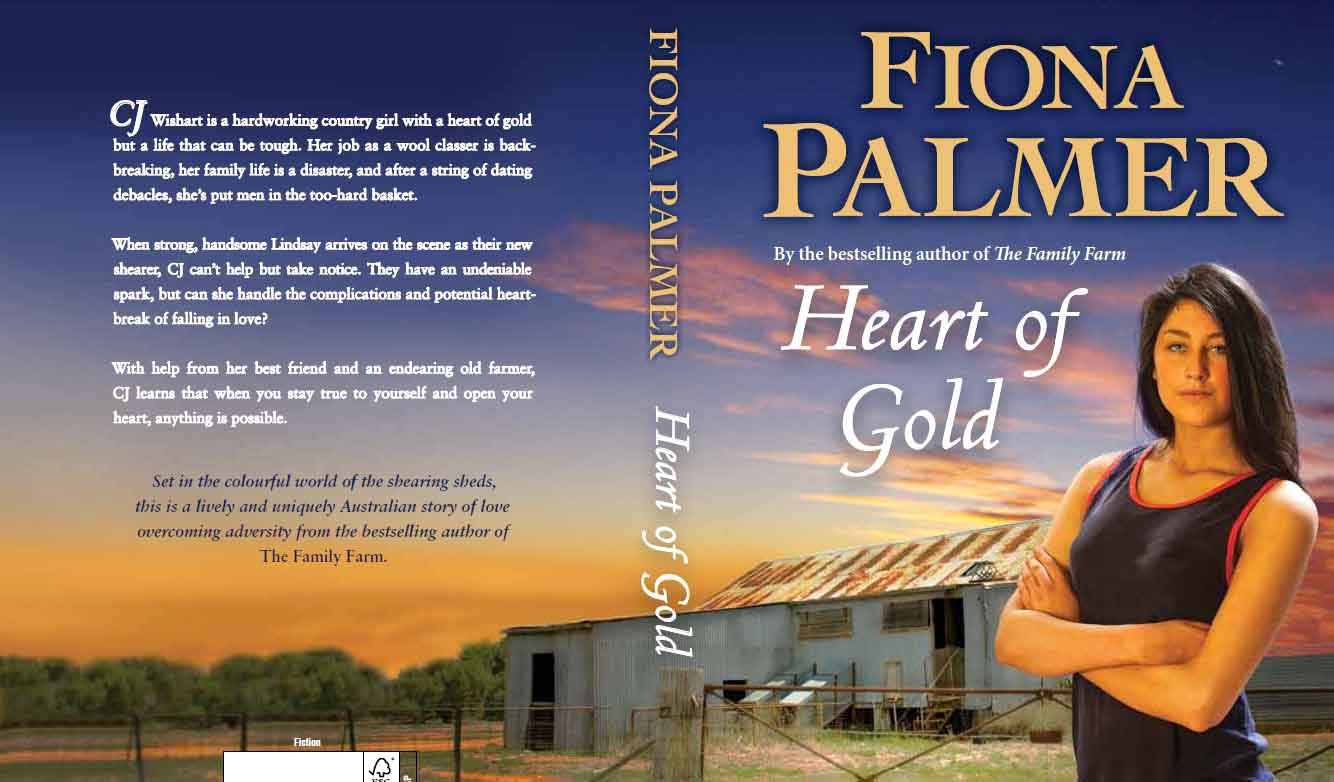
Fiona Palmer's latest book Heart of Gold is due for release on Feb 28th.

What authors/books did you read as a child? When did you first discover your love of books?

I really remember getting into books when I was 10 or 11 and the only books my mum had around the house were her Danielle Steele books. I can remember taking Summers End to read at school when we had free time. I guess that’s where my love of romance began and since then everything has to have a touch of romance for me read it, and enjoy it. Then books disappeared through high school and I was married and had kids fairly early so it wasn’t until four years ago I really got back into reading.

When did you first realise you were a writer? What do you hope your readers will take away with them from reading your books?

I guess when I got the first story I wrote contracted to Penguin is when I started to realise it. Before then, I’d never imagined being a writer as English wasn’t my strongest subject and I still struggle to spell and handle my grammar! But I always had plenty of imagination and one day it built up into a story I’d like to read and so I sat down and wrote it. Then I was addicted. I hope my readers will feel the emotions I do when I write my stories. I’d like them to laugh, maybe cry and feel like they are experiencing everything along with my characters. I want them to feel good after reading it, as for me reading is an escape with a happy ending.

Do you find it difficult to read purely for pleasure? Does everything you read come under your ‘writer’ microscope?

No, I get so involved in books that for me it’s nearly all for pleasure. If find it hard to get my ‘writers microscope’ to work. I’m someone who wants to sit back and be transported to another ‘world’ and not pick it to bits. I might take some things from certain books but give me a week and I’ve forgotten what those things were!

Do you have to avoid reading certain types of fiction while writing your own? Does what you read while writing have an effect on what you write? In what way?

If I’m trying to write, then most of my time is usually focused on that, its so limited with kids and work I can’t affort to pick up a book - that’s time I could spend writing. But if I do treat myself, (there are those days where my laptop is like poison and I don’t want to go near it) usually I’m reading YA books, which is totally different from ‘rural lit’. Vampire’s and tractors don’t seem to mix.

Name five authors or books that have influenced or inspired your own writing in some way?

I could only think of four!
Danielle Steele – for my love of romance.
Tony Parsons – As his were the first ‘rural’ books I ever read.
Rachael Treasure – After finishing my first manuscript, my aunty gave me her book Jillaroo to read and I knew from that marvellous book that there was a market for my ‘rural’ book.
Richelle Mead – for inspiring me to start writing a YA series. (although not on vampires)

If you were travelling and were told you could only take one book with you, what book would it be and why?

Gee wiz, that’s a hard one. I guess it would be the next one on my to be read pile and then I’d hope it would be really good so I wasn’t disappointed!

What makes a book ‘too good to put down’?

It’s being interested from the start by a hook, the voice of the writer, the feelings of the characters and the setting. You need good setting to bring you into the book, too much, it weighs you down, to little, and you’re just skirting the edge, not fully involved. Oh, and lots of romance!!! (did I mention I like romance?)

What makes you put down a book without finishing it?

For me it’s not having a hook right from the first chapter. I like to be sucked into the book or else I will put it down. Being a busy mother I can’t afford to be wasting my time on something I’m not enjoying. Books that build up slowly don’t get much of a look in with me. Also ones with many heavy descriptions, I like a lot of dialogue and a fast pace. I prefer books without too many big words, and I don’t like many literary books. If I want to learn something, I’ll pick up an encyclopaedia. I read for escapism. LOL

Do you have a favourite author? Who is it and what is it about their writing that draws you to them?

Hmm, I guess at this moment its Richelle Mead for her Vampire Academy series. She ticks all my boxes: romance with a hunky older guy who’s one of the best fighters, a gutsy leading lady with a few flaws but is strong and amazing, plots that weave through all six books beautifully that keep me wanting more, characters that evolve and magic powers. What more could a 32yr old mother - who sometimes still feels like she’s 17 - want.

If you had to list them, what would be your ‘top ten’ reads of all time (excluding the classics) and why?

LOL, I’ll try. I’ve only just started reading lots since joining our local book club about three years ago…before that I was lost in life.


Water for Elephants – Sara Gruen
Border Watch – Helene Young
Jillaroo – Rachael Treasure
Ransom – Julie Garwood – another one that started my reading early on.
Harry Potter – I was a teacher assistant when I read this with the kids.
Vampire Academy – Richelle Mead
House of Night – PC and Kirstin Cast – Who makes the weird seem so normal!
The Delta – Tony Park – for so much that happened in the first chapter!
Dark Country – Bronwyn Parry – mystery in the bush, with romance!
Twilight – Stephenie Meyer

What was your 2010 ‘best read’? What was it that made it number one?

I guess it would be Richelle Mead’s VA series, because I had six books to fall in love with and I’ve never waited with anticipation about any other book coming out before. It was written just for my inner teenager.

What do you think of the non-traditional publishing methods – eBooks etc? Do you think the new technology will encourage more people to read? Do you think there’s a future for print books?

I’ve never read an eBook before - maybe in the future?? However, I think there will be room for both. I will still always buy a book, for the smell, the texture and being able to display it on my bookshelf. And I can see the benefits of an eBook when travelling too. As for encouraging more people to read? Maybe. Kids love technology.

Fiona Palmer is the bestselling author of The Family Farm, for which she received an Australian Society of Authors mentorship. She lives in the tiny rural town of Pingaring in Western Australia, three and a half hours south-east of Perth. She has extensive farming experience, and was a speedway-racing driver for seven years. She currently works at the local shop in between writing her next book and looking after her two children. Find out more about Fiona at
www.fionapalmer.com


Saturday, February 12, 2011

Steph Bowe - Author Interview Series


Steph Bowe is a sixteen-year-old YA author. Her debut novel, Girl Saves Boy, was published by Text in September 2010. She writes a blog called
Hey! Teenager of the Year and lives in Victoria with her family.

What authors/books did you read as a child? When did you first discover your love of books?

I've always had books around me - my parents read to me a lot when I was young, and I've devoured books for as long as I can remember. I remember as a very young child my favourite books were The Very Hungry Caterpillar by Eric Carle and a book called The Lighthouse Keeper's Lunch, both of which contained drawings of food, which were my favourite parts. I've always been a big fan of food, as well as books..

When did you first realise you were a writer? What do you hope your readers will take away with them from reading your books?

I don't think I realised I was a writing. I've just always loved writing. I can remembertyping out stories on an old computer when I was five, and even before I could write drawing pictures and telling involved stories to accompany them. I hope that people reading my books will enjoy them, feel as if reading my book is time well-spent. With a lot of what I write, isolation and loneliness are big themes, and I hope if someone reading is experiencing similar emotions to my characters, they feel a little less alone. I want my books to be ultimately hopeful.

Do you find it difficult to read purely for pleasure? Does everything you read come under your ‘writer’ microscope?

I do, but mainly because I also mainly read books I receive for review on my blog, so I always read with a critical eye. I do always compare that writer to myself, which is never good. I'd love to be able to just read books and not constantly think 'I wish I could write like that!' just think 'Wow, this is great.'

Do you have to avoid reading certain types of fiction while writing your own? Does what you read while writing have an effect on what you write? In what way?

I read everything, and so far what I'm reading doesn't seem to affect what I'm writing.

Name five authors or books that have influenced or inspired your own writing in some way?

I don't think there are any particular authors or books that have had a masive effect on me - there are a lot that have inspired me, though. Five authors whose work inspires me would probably be Simmone Howell, Melina Marchetta, Cath Crowley, J.D. Salinger and John Green.

If you were travelling and were told you could only take one book with you, what book would it be and why?

A book I've not yet read, but that I know will be great. And then, during my travels, I'll probably end up buying more books. Hopefully interesting second-hand ones.

What makes a book ‘too good to put down’?

I don't think it's one particular thing you can put your finger on - it's many things, it's an unnameable magic. Beautiful writing and characters so real you can imagine bumping into them down the shops and emotional depth are all qualities of books I have difficulty putting down.

What makes you put down a book without finishing it?

False characters and plotlines and no emotional involvement. I usually keep reading in the hopes a book will improve, and very rarely will I abandon a book, half-read.

Do you have a favourite author? Who is it and what is it about their writing that draws you to them?

I can't name one favourite author! Though I do love the authors I named above, and many more. I think what I love about their writing is the believability of it - the characters become real to me, and I really care about them.

If you had to list them, what would be your ‘top ten’ reads of all time (excluding the classics) and why?

This is impossible. But I will try. I would probably have a different list next week. All of these I chose because they are wonderfully written, and they made me think about things differently than before, and they are the kind of books I wish I'd written.

On The Jellicoe Road by Melina Marchetta
After January by Nick Earls
Will Grayson, Will Grayson by John Green and David Levithan
Looking For Alaska by John Green
Your Skirt's Too Short by Emily Maguire
Town by James Roy
Graffiti Moon by Cath Crowley
Wintergirls by Laurie Halse Anderson
Everything Beautiful by Simmone Howell
King Dork by Frank Portman

What was your 2010 ‘best read’? What was it that made it number one?

Graffiti Moon by Cath Crowley. Beautifully written and wonderful characters and just absolutely magic.

What do you think of the non-traditional publishing methods – eBooks etc? Do you think the new technology will encourage more people to read? Do you think there’s a future for print books?

I can see a future world where people read both print books and ebooks. I hope more people will read. I think the line between books and other forms of media will blur more. I don't mind ebooks - I already do a lot of reading off a screen - but the feel and lendability of a print book isn't something I want to give up.

You can find out more about Steph online at...


stephbowe.com
twitter.com/stephbowe
facebook.com/stephmbowe

Monday, February 7, 2011

Raymond E. Feist - Author Interview Series


Raymond E. Feist is the author of thirty novels, including the widely renowned Riftwar Saga. He has been on the Times (London) Bestseller List, the New York Times Bestseller List, and every other major bestseller list multiple times over the course of his career.

What authors/books did you read as a child? When did you first discover your love of books?

I was read to as a child, which always made me love stories. I got into serious reading when I was maybe nine or ten, when I began to "inhale books" as my mother called it. The first "serious" book I can remember reading was Huckleberry Finn, which captivated me, because Twain made the 19th Century Mississippi River country around Missouri live. I quickly developed an appetite for what was known in the late 19th Century, early 20th Century as "Boys Adventure" books, i.e. Robert Louis Stevenson, Sir Walter Scott, Howard Pyle, Anthony Hope, etc. as well as historical novelists like Samuel Shellenbarger, Mary Renault, Harold Lamb, and especially Thomas Costain. I didn't get into science fiction or fantasy until I was a teenager.

When did you first realise you were a writer? What do you hope your readers will take away with them from reading your books?

I first realised I was a writer in college, my second time around. I had taken a bit of an hiatus for several years. I had an assignment to write, an essay, and frankly I was overwhelmed by other classwork, my after school job, and my thesis. I hammered out the paper at 5 am the day it was due. I got an A and the instructor read it to the class aloud. To say I was floored is an understatement. But it was then I learned rule number one about good writing; it's not what you say, but how you say it 90% of the time.

As for what the reader gets out of all this, I only seek to entertain. I, like most writers, am commenting on the human condition many times, for it is struggle, achievement, sacrifice, and all the rest of it that is the foundation of drama. If a reader gains a personal insight or makes a change for the better in his or her life, that's their doing. It's all on them, and if my work was a catalyst I'm quick to point out that if it hadn't been my work it would have been something else, for the reader was ready for that change.

Do you find it difficult to read purely for pleasure? Does everything you read come under your ‘writer’ microscope?

Yes and no. I can't read much fantasy anymore, and only when I'm not in the throes of writing, which isn't often these days. I read other people's fantasy when I'm on vacation or taking a break, which means I really haven't read any other fantasy in a few years. When I have a little down time I like biography and history and politics as my main focus for recreational reading.

Do you have to avoid reading certain types of fiction while writing your own? Does what you read while writing have an effect on what you write? In what way?

I don't avoid anything because I'm worried I'll borrow; I've been at this too long, thirty three years now. I avoid it because I go cross-eyed at a certain point reading about another magician, or dragon, or whatever, because by the end of my work day I'm pretty sick of the whole genre. Now, about real people, that gets me going.

Name five authors or books that have influenced or inspired your own writing in some way?

Only five? That's tough.

I'd have to begin with the collected works of Shakespeare because first, he's the best ever, and second it's the way in which he looks at the human condition and has the story unfold; story first, but massive insights into the nature of humanity revealed. Hamlet is amazing.

Second would be Huckleberry Finn, because it's simple and brilliant and so deep at times it can make you cry for the sheer honesty of it.

Third was a book by Thomas Costain, The Money Man. Understand, he was a serous historian, but when he wanted to look at truth more than fact, he wrote historical novels. That book was about a gent named Jaques Coeur, the financial muscle behind King Charles VII. It made me realise that it wasn't only kings and heros who create history. My novel Rise of a Merchant Prince was my own attempt at that sort of story.

Fourth would have to be an early Heinlein "juvenal" novel, Tunnel in the Sky, because the hero was fourteen, my age, and he was competent and successful, and that was as alien a concept as I had ever encountered.

Fifth would be Tolstoy's War and Peace, because it's massive yet intimate. It tells the story of this terrible war as a background, but at its heart it's the story of a single man, Pierre, and his search for love.

And the last title is subject to change every fifteen seconds at whim. Because every fine book I've read in some way or another has left its fingerprints on me.

If you were travelling and were told you could only take one book with you, what book would it be and why?

It would be the one volume Shakespeare. There are a couple of editions, but I suspect in this day and age I'd get the eversion for my iPad. I'd pick that because it never gets old. I've read Hamlet a few times and I'm always finding new stuff in it. Midsummer Night's Dream always makes me laugh out loud at the same places. Romeo and Juliet is always heart wrenching for the fickle nature of time. He was simple the best ever.

What makes a book ‘too good to put down’?

My position is you grab the reader by giving him/her someone to care about then tossing the poor soul into a lot of trouble. Keep it moving and don't get bogged down. Something my father said to me once about film is also true in books: "if you're not writing action you're writing talking heads; if you're writing talking heads, they better be saying something important to the story".

What makes you put down a book without finishing it?

Condescending to the craft. Any author who is giving me a wink and nod telling me I needed take what he/she does seriously, well, I'll take them at their word and not take them seriously. Anyone who is asking me to do the work in the story, i.e.I don't have to think the character is doing something smart, but I have to believe the character thinks he/she is doing something smart. If I have to justify what the character's choice is, in other words the author doesn't do it correctly, I'll lose interest. Lazy choices and bad style.

Do you have a favourite author? Who is it and what is it about their writing that draws you to them?

Not any one. There are several who's work I enjoy. There are some popular writers like John Grisham or Clive Cussler who suck me in because of their style. Clive is on my "guilty pleasures" list because his Dirk Pitt is like James Bond. If he had really gotten banged around as much as the stories say he'd be in hospital for life, but he bounces back. Writers whose work I admire, that's a long list. A few of them include Tim Powers, Jonathan Carroll, Larry McMurtry, the late John D. McDonald, Andre Norton, Harper Lee (if you're only going to write one book, that's the one), and I just realised this list could cover pages.

If you had to list them, what would be your ‘top ten’ reads of all time (excluding the classics) and why?

Excluding the "classics?" Wow. OK, let's see. Assuming you're talking fiction.
10. Land of Laughs, by Jonathan Carroll, because it is one of the best written, most ingeniously crafted contemporary fantasy novels ever.
9. Dune, by Frank Herbet, because it's the original "A long time ago in a galaxy far, far away," story, the first "historical novel about a place that doesn't exist." Because it's huge but he made me care about everyone in it.
8. Anubis Gates by Tim Powers, because it's so wry, so smart, and yet so well detailed and researched it makes me accept silly premises as possible.
7. The Moon is a Harsh Mistress by Robert A. Heinlein, because it's social science fiction at it's best. And because the author posited a society necessitated by circumstances beyond our ability to experience. It's the wild west meets Star Trek.
6. The Lord of the Rings, because it's a watershed. WIthout it I wouldn't be making a living and because at it's heart is the story of a little guy. Wonderful stuff, and if you have to explain why it's wonderful, the person you're talking to has something missing.
5. The Natural by Bernard Malamud, because it's a timeless story and about so much more than baseball. It's about dreams and aspirations and overcoming human frailty and craziness.
4. The Iowa Baseball Confederacy by W. P. Kinsella, because it's wonderful silly, hopeful and at the end validates your believe in the human heart. I like it more than his more widely hailed Shoeless Joe (Field of Dreams)
3. Slaughterhouse Five by Kurt Vonnegut, because it's maybe his best book, and because like the others it ultimately speaks to the human condition and the need for love. In his heart every man has a Montana Wildhack out there somewhere he longs for; if he's lucky he married her.
2. The Firm by John Grisham. In the realm of law-thriller fiction, maybe the best every. If a guy can make you sit up, heart pounding, knuckles turning white from gripping the pages while he describes a character making photocopies, he's good.
1. A Canticle for Leibowitz by Walter Miller, because it was an amazing cautionary tale in its day that still holds up. It's funny and bleak and sad and hopeful all at the same time. My agent represented Miller, so I have a little insight and can only say you'd have to be slightly nuts to write this, and he was, but that crazy took him and the reader to wonderful places in the human soul.

I hasten to add that the above list is subject to change without notice and at whim. That list reflects how I felt after one cup of coffee at 6 am on a Tuesday, and I will most likely be thinking for the rest of the week, "Oh, wait, I should have included . . . ! Moreover, lists are fun but lists are stupid. and don't take them seriously.

What was your 2010 ‘best read’? What was it that made it number one?

A book that I actually had sitting on my "to read" pile for over five years, truth to admit. It's Will in the World: How Shakespeare Became Shakespear by Stephen Greenblatt. It's in my opinion the finest biography of Shakespeare ever and looks at his life in the social context of England as he grew up. I think the scholarship is brilliant and it's fun to read.

What do you think of the non-traditional publishing methods – eBooks etc? Do you think the new technology will encourage more people to read? Do you think there’s a future for print books?

I don't have strong opinions, but I have opinions. I think it's too early to tell what the impact will be. The task for the writer is still the same: write a good book then find an audience. The first task is unchanged. The second task now has more ways to get out there. The problem with "non-traditional" is that there's no time tested marketing apparatus that will let potential readers know you're there. That may be changing and if so, good. As for books, of course there's a future. Remember, books do a wonderful job of being books. They're easy to carry around, you can stick them in your back pocket and not break them, and if you lose one, it's pretty cheap to replace compared to a computer or iPad.

Born in Southern California, Raymond E. Feist currently resides in San Diego, California with his son, while his daughter attends college. He loves fine wine, good whiskey, and bad women, and the company of good friends. You can find out more about Raymond at www.crydee.com/

Friday, February 4, 2011

First Day

For those of you who don't know, my youngest son J has autism. We've been fortunate to have him mainstreamed and funded throughout his primary education. Today is his first day at secondary school and, after hearing the principal welcome the students and introduce his teaching staff, we parents (those of us who stayed) were more or less told to skedaddle. So I said goodbye, told him where I would meet him after school and restrained myself from kissing him.

I headed to the door feeling mildly confident that he would enjoy his day. I took one last look back, hoping to catch his eye and give him a wave and he had disappeared. I scanned the rows of students but couldn't see him anywhere. Puzzled, I turned to the front of the room where the teachers still stood and there he was, standing in front of his 'learning mentor'. Not more than five minutes before I had reminded him that if at any time he was feeling sad, worried or lonely he could always go and talk to his learning mentor. I'm thinking he wasn't feeling as 'okay' about his first day as he had made me believe. Still, I'd done all I could do to make this transition as comfortable as I could for him.

He was originally enrolled to go to another school with a student population of 1400, my decision based solely on the fabulous integration program they had there. As soon as I realised we wouldn't be getting any help from the Government I found another school for him. Today he has joined around 149 other year 7s at a brand new school, with well-planned buildings and a fresh new teaching staff. We have visited the school a couple of times prior to today and spoken with the principal and a couple of the staff. I have put together a page of information and ideas to help J's teachers to better understand and help him. I can only trust that they will read it.

I'm at home now and feeling all kinds of emotions about this day and the years to come. I'm feeling apprehensive, proud, relieved; relieved that the build up to this day is over and he's finally there and proud of all the hard work he has put in to get here. But I'm also feeling ripped-off and angry on J's behalf. We had to reapply for funding at the end of last year and we were knocked back. We appealed the decision and were again knocked back. The hard work we've put in over the last seven years (nine, if we count the two years of early intervention at the autism school before that) is just the foundation; the next six years are even more important to J developing the skills he'll need to be able to get and keep a job and be as independent as he can possibly be as an adult with autism. Having this extra, vital support denied to him now is like a kick in the guts. I'm still pursuing the Government for funding. I have written to the Minister for Education. I won't be giving up.

Monday, January 24, 2011

Wendy Orr - Author Interview Series

Photo by Roger Gould


Wendy Orr's junior novel Nim’s Island has been published in 24 countries around the world. In 2008 it became a Hollywood feature film starring Jodie Foster, Abigail Breslin and Gerard Butler. Her latest release is the picture book The Princess and her Panther. Raven’s Mountain, an adventure novel for middle grade readers, will be published by Allen & Unwin in February.


What authors/books did you read as a child? When did you first discover your love of books?

The love of stories, books and being read to goes back earlier than I can remember; the passion for reading books for myself – and perhaps the start of wanting to write them – wasn’t till I was nearly 7. We lived in France, so I’d learned to read and write with rather boring French readers. However one night before we moved back to Canada, my parents left three ‘Dick and Jane’ readers on my bedside table for me to find. I’ve never forgotten the thrill of reading real stories in my own language!

When did you first realise you were a writer?

When I sat at the coffee table and began writing, “Glossy the Horse or Shetland Pony,” when I was seven. However I didn’t believe I was an author till “Leaving it to You” was shortlisted, many years later!

What do you hope your readers will take away with them from reading your books?

I’m never sure about this question… I’d like them to take away a feeling of their lives being enriched in some way; depending on the genre, I think that means of having lived in someone else’s shoes or been captivated by the fun of word play and story.

Do you find it difficult to read purely for pleasure?

No; when I find a good book I am quickly immersed in it – but I can’t read something that I feel is sloppily written.

Does everything you read come under your ‘writer’ microscope?

I suppose my answer above means it does, but if the book’s good I am simply swept along with it and enjoy the fact that someone has written so well. If I don’t enjoy a book that has had rave reviews I do often spend a long time pondering why I can’t agree, and where I think it’s gone wrong.

Do you have to avoid reading certain types of fiction while writing your own?

Not any more; I used to be more easily swayed when I was still finding my own voice. However when I’m starting a new book I often can’t read any fiction for a week or two.
Does what you read while writing have an effect on what you write? In what way? I don’t think it affects what I’m writing at that moment, but every book one loves and gets involved with must bleed into the subconscious to some extent.

Name five authors or books that have influenced or inspired your own writing in some way?

Mary Renault; Rosemary Sutcliff; Rumer Godden; The Queen’s Music; Mary Poppins

If you were travelling and were told you could only take one book with you, what book would it be and why?

Possession by AS Byatt – because it’s very long, has three different story strands, and requires deep reading. Also I love it!

What makes a book ‘too good to put down’?

Involvement with the characters, and truly caring what happens to them.

What makes you put down a book without finishing it?

Sloppy writing; repetition that should have been edited out, or stereotypical characters that I don’t care about.

Do you have a favourite author? Who is it and what is it about their writing that draws you to them?

Probably AS Byatt, because of the depth of her stories and the beauty of her writing. However you can’t please all the people all the time: I felt that The Children’s Book had so many side stories and lectures that she could have edited it down by a third.

If you had to list them, what would be your ‘top ten’ reads of all time (excluding the classics) and why?

Do you have any idea how hard that is??? Okay, I’ll try.
I don’t think I can explain why for each of these, except that they all have lovely language and have resonated with me in some deep way.

Cat’s Eye by Margaret Atwood
The Djinn in the Nightingale’s Eye by AS Byatt
The Lost Salt Gift of Blood by Alistair Macleod
A Fine Balance by Rohinton Mistry
The Dog Who Wouldn’t Be by Farley Mowat
Illywhacker by Peter Carey
Midnight’s Children by Salman Rushdie
House of Spirits by Isabelle Allende
Atonement by Ian McEwan
The Merry Go Round in the Sea by Randolph Stow

What was your 2010 ‘best read’? What was it that made it number one?

It’s between Cassandra Gold’s Museum of Mary Child, which was beautiful, engrossing, and highly original, and Rohinton Mistry’s A Fine Balance (which is quite old but I hadn’t read till now) – I was totally engrossed by the characters, story, and writing, and felt that it prepared me for a visit to India far better than any non fiction every could have.

What do you think of the non-traditional publishing methods – eBooks etc? Do you think the new technology will encourage more people to read? Do you think there’s a future for print books?

I think there’s a future for print books, but maybe more in the way that there are still beautiful hardcovers around – maybe it will be just the books that we really care about and want to keep physically. My sample of one is my daughter, in her 20’s, who’s found she’s reading a lot more since she’s had an iPad, partly because she travels a great deal and so can take several books with her for any flight. As well as reading her way through the classics, if she sees a review of a book that sounds interesting, she purchases and downloads it immediately. (Whereas I’ve often forgotten the review by the next time I go to town and into a physical bookshop!)

Wendy started writing seriously in 1986, with her picture book Amanda's Dinosaur. In 1993 Leaving it to You was shortlisted for the CBCA awards, junior readers; Ark in the Park won the same award in 1995. Peeling the Onion, based on a serious car accident Wendy had in 1991, was widely published internationally, with awards including the CBCA Honour Book, older readers, in 1997, and an American Library Association Book for older readers. LOST: A Dog Called Bear, the first of the Rainbow Street Animal Shelter series, will be released by Henry Holt in the North American spring 2011. You can find out more about Wendy at www.wendyorr.com/

Monday, January 17, 2011

Juliet Marillier - Author Interview Series


Juliet Marillier has written eleven historical fantasy novels for adults and two books for young adults. Her most recent publication is
Seer of Sevenwaters (Pan Macmillan Australia and Roc US.)

What authors/books did you read as a child? When did you first discover your love of books?

My parents read to me and told me stories long before I learned to read, and I grew up in a home where books were valued, so my love of books is almost as old as I am. Some of the books I loved as a child were the Moomin books by Tove Jansson, the Narnia books by C S Lewis, and Andrew Lang’s collections of fairy tales. Other favourite authors were Noel Streatfeild, Lorna Hill, and Louisa May Alcott.

When did you first realise you were a writer? What do you hope your readers will take away with them from reading your books?

I’m not sure there was a moment of realisation! I did a lot of creative writing up till the time I started university, then I became more interested in music and worked in that field for years. I guess I really did know I was a writer at heart, but many years passed before I went back to doing it seriously. I hope my readers will be swept up in my storytelling – that’s the first level. On the next level, I hope they’ll find truth, learn something about themselves, be helped in some way, and/or discover a fresh passion for reading or writing. I love it when my readers tell me that’s happened for them as a result of reading my work.

Do you find it difficult to read purely for pleasure? Does everything you read come under your ‘writer’ microscope?

I’m far more aware of the craft of writing these days, so I don’t often manage to read without the writer microscope. I choose my recreational reading carefully. I go back to writers I know are consistently good. I try new writers on the basis of reviews (not always a reliable guide!) or on the recommendation of family and friends who know my tastes well. The very best books don’t come under the writer microscope because they draw the reader right into the story from the start. It’s only when you reach the end that you realise how well the book was written.

Do you have to avoid reading certain types of fiction while writing your own? Does what you read while writing have an effect on what you write? In what way?

I generally steer clear of any novel of similar genre to my own while writing, in case I unknowingly pick up the author’s style or ideas. In fact my recreational reading is almost always outside my own genre anyway, as I’m keen on mainstream fiction, women’s fiction and some literary fiction – I do like historical fiction but I read very little fantasy. I read a lot of non-fiction while I’m writing, some research related, some for my own enjoyment. And I read mythology, fairy tales, commentary on fairy tales etc. I believe my lifetime of reading traditional stories shows in my writing, making it richer.

Name five authors or books that have influenced or inspired your own writing in some way?

William Shakespeare: studying the plays at high school had a great impact on me. He was a master of shaping dramatic scenes and a powerful user of language.
Charlotte Bronte: Jane Eyre (the book that made me love romance)
Dorothy Dunnett: The Game of Kings and its sequels (her books are a master class in writing historical fiction)
Daphne du Maurier: Cornish novels (exciting romantic stories told with an elegant simplicity of style – she could create a scene or image with a few perfectly chosen words. I especially like Jamaica Inn with its feisty female protagonist and bad boy hero.)
Andrew Lang’s fairy books: The Red Fairy Book, the Blue Fairy Book etc had a lifelong impact on me, as they introduced me to the world of myth, legend and fairytale which has played a huge part in my development as a storyteller

If you were travelling and were told you could only take one book with you, what book would it be and why?

A big book of mythology, perhaps the Welsh Mabinogion. That would keep me going for a long time and it would provide lots of food for thought. I might need a porter to carry it.

What makes a book ‘too good to put down’?

For me, it’s the winning combination of great storytelling, excellent writerly craft and originality.

What makes you put down a book without finishing it?

Poor writing, gratuitous sex or violence, ‘head-hopping’ (changes of point of view within a scene), a story that’s overwhelmed by the author’s personal/political/religious tub-thumping, a story lacking any empathetic characters.

Do you have a favourite author? Who is it and what is it about their writing that draws you to them?

I can’t single out only one author. There are several authors whose new releases I always buy: David Mitchell, Iain Banks, Jodi Picoult, Neil Gaiman. They’re all quite different. What they share is that combination of great storytelling and excellent craft.

If you had to list them, what would be your ‘top ten’ reads of all time (excluding the classics) and why?

(In no particular order – I’ve left out children’s books)

The Crow Road by Iain Banks
The Business by Iain Banks
Little, Big by John Crowley
Cloud Atlas by David Mitchell
The Game of Kings by Dorothy Dunnett
The Secret History by Donna Tartt
Women Who Run With The Wolves by Clarissa Pinkola Estes
The Gospel According to Jesus Christ by Jose Saramago
Riddley Walker by Russell Hoban
Selected Poems by George MacKay Brown

My ‘top ten’ covers a pretty broad range of style. I’ve included a book of poetry and a book about women’s roles in traditional stories (Clarissa Pinkola Estes). The rest are novels. My list favours the quirky and unusual. They’re all books I have on my ‘keeper’ shelf and will come back to over and over. Each of them has been memorable to me in its own way, and some of them have been life-changing.

If you asked me for a ‘top ten’ in the sense of great works of literature that everyone should read, it would have some different books on it. This list contains my personal favourites.

What was your 2010 ‘best read’? What was it that made it number one?

The Guernsey Literary and Potato Peel Pie Society by Mary Ann Shaffer. This is an engaging, unusual novel written through letters. I was caught up in the story from page one and captivated all the way through. It combines comedy and tragedy with a deft, light touch. Fantastic storytelling. I was feeling rather low at the time and it made me happy.

What do you think of the non-traditional publishing methods – eBooks etc? Do you think the new technology will encourage more people to read? Do you think there’s a future for print books?

I don’t own an e-reader, but I understand how convenient e-books are for people who travel or commute and don’t want to lug print books around, and I can see big advantages of the e-format for textbooks or research material. I don’t think the availability of e-books on its own will encourage more people to read books. Lots of people read a significant amount of text online in blogs etc, but many of them won’t engage with something requiring as much time and concentration as a novel does. I think the same people who read now will read in the future, probably dividing their reading between e-books and print books. Many people, like me, vastly prefer to read off-screen and like the physicality of a print book. I don’t think that is entirely age-related. However, publishers of print books may find it increasingly hard to turn a profit, especially if e-book prices are significantly lower than print book prices. This will also have an impact on writers’ ability to earn a living from what they do. Lower book price, lower royalties.

Juliet Marillier was born and brought up in Dunedin, New Zealand, and now lives in Western Australia. She is a graduate of Otago University and worked as a teacher and public servant before becoming a full time writer. Her novels are published internationally and have won a number of awards. Juliet is a member of the druid order OBOD. When not writing she tends to a small pack of needy animals.

http://www.julietmarillier.com/ (website)
http://www.writerunboxed.com/ (award-winning genre writing blog; Juliet posts monthly)
http://www.facebook.com/pages/Juliet-Marillier-Official-Fan-Page/104020489628627?ref=mf (Official Facebook Fan Page)