Showing posts with label fiction. Show all posts

Monday, December 31, 2018

2018 - My Year of Reading

http://www.robinhobb.com/

I’ve been thinking about my blog a lot lately, about how neglected it has been. It is sad and lonely without me, and in need of a little update I think. Many thanks to those who still visit.

I still consider myself a writer, but I am so much more. I am writing, on and off (I never completely stop), but nothing major, nothing large. I am mostly writing poetry and have been attempting to put together enough for a collection. In fact, I had finally motivated myself to making a goal to submit a manuscript to Five Islands Press - a spectacularly reputable publisher of poetry - during their submission period in November, only to discover at the eleventh hour that they had decided to “retire” this year with the manuscripts they already had and were closed for submissions now and forevermore. I admit, this bummed me out big time and I did all the usual pulling of hair, woe is meing, what is the point of it all etc etc... it wasn’t pretty. But then I remembered there were other things I enjoyed doing and kept doing them.

I’ve been making a lot of art. I LOVE colour. Colours. All of them. I have been learning new ways of making art, using new techniques, new products. I am quite in love with art jornalling right now and am forever trying to be more spontaneous and messy with it...I can be a bit controlled in my approach - a bit of a perfectionist, really - which is weird, because as a writer, I have always been a pantser and never a planner. If you are a writer you will understand this and probably swing more one way than the other.

Anyway, you’re here for my “Year of Reading” update, so here you go...


Trent DaltonI gave myself what I thought was an achievable goal of reading 60 Books this year. Due to a rather large amount of lethargy and a particularly bad winter with my ongoing depression I didn’t quite manage it. I read, but much less than usual. My memory being what it is (or isn’t!) lately, luckily I record my reading on goodreads.

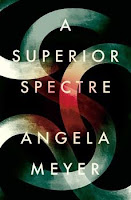
http://www.krissykneen.com/There were some great latecomers in the last quarter of 2018. Wintering by Krissy Kneen, A Superior Spectre by Angela Meyer, and The Fragments by Toni Jordan. As usual, I read quite a bit of poetry and sought inspiration in the pages of some great art books. I finally read Robin Hobb’s The Fitz and The Fool trilogy and I was absolutely blown away. I cried buckets. Another amazing standout was Trent Dalton’s Boy Swallows Universe. Simply spectacular. I devoured every single scrumptious word of it. Trust me, you need to read this book. Honestly. Just do it!

Another change in my world is the very late diagnosis of an autism spectrum disorder. A short while back it would have been called Aspergers, but my diagnosis came after the latest changes to the terminology. The diagnosis didn’t come as any surprise to me, I sought it out after all, knowing it was more than likely given my son’s autism and my lifelong struggles with most everything, but especially social interactions and sensory issues. I have always, always, been weird. Funnily enough, even with the lack of surprise and the welcoming of the diagnosis, it took me almsot four years to settle into it. Almost fifty years of life pre diagnosis, takes some time to look back on, analyse, and assimilate. So many aha moments. So many what ifs. So many events and incidents. But I’m here now, and I’m getting a handle on who I am. 
https://literaryminded.com.au/So I’m thinking of making a bit of a change to this blog - or perhaps even starting a new one on a different platform. Rest assured there will always be books, for books were my first friends and teachers, but I will be adding some art and craft and conversation. Join me, won’t you?

As for 2019, I have dedicated it, the year of the kindle. I have so many unread books gathering dust (haha!) on my kindle that I think it’s high time I read them. So, for the duration of the next twelve months that is my plan. Like every other year, I will read as many books as possible, but only from my kindle. If I absolutely ’must’ read a new release during 2019, I will buy a digital copy of it, otherwise all new physical books can wait until 2020.  I can see already that I will miss reading poetry, but perhaps to fill this need I will endeavour to write more. Time will tell. Enjoy your new years celebrations. Health and happiness to you all.


Saturday, December 31, 2016

2016 - My Year of Reading

In a year when many have been 'coloring' books, I've been reading them. (Not that there's anything wrong with a little art-therapy. I'm all for it!)

At the closing of 2015, I decided to set myself a reading challenge for 2016. I read around fifty books each year anyway, so I challenged myself on Goodreads to read seventy books. Initially, I thought I would struggle; after all, there are still only 365 days in a year and 24 hours in a day, where was I to find the time to read an extra twenty books? Turns out I should always back myself. I surpassed my challenge by reading over eighty books. I'm going to recommend some of my favourites below. Perhaps you could put them on your to-read list for 2017.

As usual, my reading was varied. I have tasted almost everything on the menu this year. Poetry. Essay. Memoir. YA. Anthology. Self-help. Art. Home decorating. Organisation. Fiction. Sewing. Psychology. Short Story. Reference.

Jandy Nelson is a new favourite of mine. Get your hands on her award-winning books, The Sky is Everywhere and I'll Give you the Sun. Yes, that's right, only two books. This is the only problem with falling in love with the work of a new author - waiting for the next book. Her books are classified as YA fiction but don't let that turn you away. As The Daily Beast said - "Those who think young-adult books can't be as literary, rich, and mature as their adult counterparts will be disabused of that notion after reading The Sky is Everywhere".

I read two more books by Claire Zorn, already a favourite from the time I read and reviewed her debut, The Sky So Heavy here. I can't rate The Protected as highly as her debut, but here's what I wrote on goodreads - "Claire Zorn knows how to write. She is especially good at portraying teenagers on the page. Teenagers in peril or in pain...I had to add it to my 'made me cry' list..." The other title, One Would Think the Deep, was amazing and heartbreaking, with many twists and turns.

Another favourite author I kept up with this year. A.S. King. Her novels I Crawl Through It and Reality Boy were a wonderful addition to my year of reading. Reality Boy joined Zorn's The Protected on my 'made me cry' list. King is a favourite of mine because she writes like a magician and explores serious themes in a no-holds-barred way.

The poetry books I gave five stars to were, Eating My Grandmother by Krissy Kneen and Night Writing by Kathryn Lomer. In all I read twenty-three books of poetry. I love contemporary poetry, especially by Australian poets. If you haven't read poetry since school I suggest you give some of the new poets a try.

I'm a big fan of short fiction. Like poetry, I suggest you give it a try if you haven't read any for a while. The collections I gave five stars to are, The Best Australian Stories 2014, The Bazaar of Bad Dreams by Stephen King and Fragile Things by Neil Gaiman. Short stories fit nicely into those small spaces we all have in our lives. If you feel you don't have the time or energy or focus to commit to a novel, try the short form. Short doesn't mean dull or superficial. Good short fiction packs a punch.


Nothing worse than an overly-long blog post, right? Well, even so, I can't leave without mentioning my five star non-fiction reads this year. Speaking Out: A 21st-Century Handbook for Women and Girls by Tara Moss and Use Your Words: A Myth-Busting, No-Fear Approach to Writing by Catherine Deveny.

Well, it's been a strange and challenging year for many different reasons and I'm happy to say goodbye to it. Let's hope 2017 is a great new beginning for everyone. Keep reading!!

HAPPY NEW YEAR!


Wednesday, February 11, 2015

Review - When the Night Comes


I received an electronic review copy of When the Night Comes many months ago. Again, due to some personal issues, I have taken far too long to post my review, but here it is at last. Apologies to the Author and Publisher.

This is a story of friendship between a man and a girl. Bo is a cook on a ship called the 'Nella Dan' that travels between Tasmania and Antarctica, delivering supplies and crew to work at the station there. Isla and her brother have moved from the mainland to Tasmania with their mother, for a 'better' life.
 
It’s obvious there is a romantic relationship between Isla’s mother and Bo, but the real story focuses on the connection between Bo and Isla. Bo expands Isla’s life. Her view of the world is broadened simply by his presence, the stories he shares with her of his life and travels. He brings colour into an otherwise monotone world. It’s an easy intimacy that grows between them; the silences, the acceptance, a familiarity that would be expected between family members, or people who had known each other a very long time. 

The actual timeline of the story is brief - two summers. Not much appears to happen, yet for these two characters everything changes. Isla grows into adolescence - beginning grade 6 at the start of the book and finishing her first year at Secondary School by the end. This is a time of great change for someone of Isla’s age, and the influence of a man like Bo on her life, in the absence of a father, is profound. As the story ends Isla has been 'called by the sea', just as Bo was, just as his father was before him. The world has suddenly become large for Isla, and filled with possibilities.

When the Night Comes is not a plot-driven story. If you are looking for action and drama, then perhaps this book is not for you? The tension is understated. Emotion is the main focus. It is the story of a man and the effect he has on a young girl at her most impressionable. Parrett didn’t clutter her story with unnecessary characters; indeed, most of the secondary characters hover on the periphery. The characters she does focus on, however, are no cardboard cutouts. They are living, breathing, feeling human beings laid out on the page in a way that reminds the reader that the smallest happening can sometimes have the largest impact. 

The way the writer draws you in is so subtle that you don’t even notice it. I cared about these characters. I wanted them to be together, for Isla and her brother to have this father-figure in their lives, and yet the underlying sadness, the restlessness of the adults was such that I was not surprised at the ending. The writing is lyrical, soulful, real. The characters were filled with heart. Parett’s storytelling is gentle, yet masterful, with its ability to draw you in so deeply with very little going on.

It is said that everyone who enters your life is either there for a reason, a season, or a lifetime. Bo opened up the world for Isla. He helped her to dream big dreams and to be unafraid of following them. Isla helped Bo realise that he wanted to have a family of his own and to raise them where he was raised, share the traditions and experiences his father shared with him. 

The lives of these two characters were made better by simply knowing one another.

Monday, February 9, 2015

Review - Are You Seeing Me?


I was given an electronic review copy of this book many months ago. Unfortunately, due to some personal problems and lack of time-management or a concrete deadline, I have been remiss in not posting this review until now. Apologies to the Author and Publisher.
I was such a fan of Kindling that I was automatically interested in reading Are You Seeing Me? I was not disappointed. Groth has created a story with heart. Family is the main focus, but in particular, forgiveness.
Justine and Perry are twins. Unknown to Justine, their father has made previous arrangements for Perry, who has a disability, to move into assisted living when he reaches adulthood. Unfortunately their father dies just before the twins 18th birthday, leaving Justine to follow through on his plans, which she is reluctant to do. She takes Perry to America for a holiday when they are 19, with the secondary motive of having him ’meet’ their mother - who left when they were four years old. Justine doesn’t want Perry to move into 'Fair Go' and is trying to arrange an alternative future for him. Perry wants wants Justine to have a 'normal' life. He wants her to be happy. He thinks the only way she can be free, and live the full life he wants her to have, is for him to leave. He is especially trying to 'cope' with things that might happen on their trip because he is worried that Justine will use any problems he might have as an excuse to keep him with her.
The author's use of the twin's father’s letters and journal add an extra layer to this dual narrator story. This pertinent back story flows naturally into the fabric of the linear story without interrupting the narrative. The theme of independence is a big one. This is something most parents want for their children, something that sometimes seems impossible for children with disabilities. The truth is, though, that no one is ever truly independent. When faced with difficulty, we all need someone’s support, regardless of how capable we are to function in the world as independent adults. Regardless of our ability or inability to care for ourselves, regardless of diagnosis.
Perry has two special interests; earthquakes and mythological sea creatures. During their trip he predicts an earthquake and his prediction comes true. Justine is hurt during the earthquake. She isn’t breathing. Perry, rather than melting down in this high stress situation and failing to function, revives Justine using CPR and gets the help of a stranger to get her to the hospital. These are things he would normally have problems with, things Justine would never expect him to be able to deal with on his own, but he does. He even calls his Mum to let her know what has happened. He had earlier found out about Justine's plans and the Skype calls she has been having with their mother. Not surprisingly, Perry is able to recognise the feelings of overwhelm that his mother experienced when they were young, feelings that so 'disabled' her that she chose to leave her children.
Perry has far more self-awareness and empathy than those around him can understand. Though Justine says, on multiple occasions throughout the book, that he is capable, I’m unconvinced in her belief. She seems unaware of just how capable he can be until he is put to the test. Perry can be calculated and selfless, he can imagine lives and scenarios in the future and how they will differ without him being there, being a problem - his sister and her boyfriend for instance. If I was to criticise the book at all, it would be the spiel that Justine uses to explain her brother’s behaviour to strangers. I don’t particularly like the rote nature of it or how often and how quickly she jumps into it. Perhaps the writer wants the reader to be annoyed with her. I certainly was.
There is a difference with being independent and being interdependent. I learnt this while studying Disability Work. Independence suggests you do everything for yourself without the need for assistance. Interdependence is the skill of being able to ask for the help you need when you need it. I believe this is far more important. Perry proved he is capable of doing just that. He saved his sister’s life. She has to respect and admire him for that. He is not the ’little’ brother she’s always taken care of anymore, he’s much more than that. He’s a man.

Saturday, March 23, 2013

Josephine Rowe - Author Interview


Josephine Rowe is a Melbourne based writer of fiction, poetry and non-fiction. Her recent work appears in Best Australian Stories, Best Australian Poems, Meanjin, The Iowa Review and Harvard Review. She is the author of short story collections How a Moth Becomes a Boat (Hunter Publishers, 2010) and Tarcutta Wake (UQP, 2012).


Is writing in the short-form something you plan or is it more organic than that? Is there a reason for the brevity? Can you describe your process for me?

A lot of my fiction is poetically-influenced, and in some ways my methodology for fiction writing—the polishing of fragments, the assembling followed by the endless paring back—is not dissimilar to the way I construct poetry. But I’d consider myself as a fiction writer foremost, whereas poems for me are mysterious creatures that come largely unbidden, and I might only write a handful of them a year.

That fragmentary element is a constant, whatever form I’m working in (non-fic included), but beyond that, the processes differ depending on the piece. Within my shorter stories, or those strange beasts that exist in the space between poetry and fiction, it’s what I call ‘cold drip’ writing; a slow filtration process where the end result is very dense, very sensory; ‘overfull’ (‘Atlantic City’ might be a good example).

More recently I’ve been writing longer stories (long for me is a few thousand words), and I think that in part, the length corresponds to how deeply the story is rooted in a particular landscape (‘TarcuttaWake’, for instance). Something about that geographical grounding invites sprawling. I’m thinking of the root systems of trees here, their relationship to the canopy.

As for brevity, I’ll be honest and say I don’t know the reason for it beyond instinct. Perhaps it can be narrowed down to two basic things: a dislike of waste, and a dislike of condescension—I can’t stand fiction that overexplains.

Raw. Honest. Exquisite. Emotional heart. I’ve read your work and in my opinion these are all accurate descriptions. When you sit down to write are you writing for yourself, for the sake of the story, or do you have an audience in mind? Do you have an ‘ideal’ reader?

‘For the sake of the story’—that’s wonderful, I haven’t been given that option before! For the sake of the story, always. A question that’s often asked is ‘what should a good short story do?’, and I don’t believe there is a form-specific function, or if there is, it’s so broad as to be meaningless (to entertain, to move, etc., etc.). The beauty of the short story as a form is how open and adaptable it is, and I think readers are more willing to go into unfamiliar territory—be it stylistically, linguistically or thematically unfamiliar—purely because of that brevity. Look at Eudora Welty’s ‘Where Is the Voice Coming From’, which is an incredibly brave and troubling story told from the p.o.v of a thoroughly reprehensible ‘other’. No way would you want to spend a whole novel with that narrator, but to spend those few pages with him, that’s manageable. 

In regards to readers, I’m mindful of ‘a’ reader, that the story has to be communicable. But no, I don’t have a particular audience in mind when I write, nor an ideal reader.

Do you ever suffer self-doubt? How do you deal with/push through it?

My self-doubt is highly-evolved, and has the astonishing ability to adapt to any environment. Did I say the right thing? Do I actually take X up on her invitation to drinks/dinner/etc., or was she just being polite? Is this the right brand of tumeric to buy? It’s a running joke, old enough to be funny despite the real and measurable setbacks.

When it comes to writing, it is certainly the biggest inhibitor. A bad morning or a bad day is small change; I might try to shake myself out of it with a walk, a phonecall to a friend or a visit to a gallery. Or I’ll put on some music or the radio and try to do boring admin things, so at least something productive gets done (again, that dislike of waste—what was it that Hemingway said about wasted days?)

But sometimes that doubt proves unshakeable, and it might settle in for a week or even months. I’m getting a little better at riding those dry spells out. They used to terrify me; I thought I’d never write another good thing. But the older I get—well, ha, I’m twenty-eight but please humour me—the older I get the more time I feel I have, the more time I feel I can and should take, and any urgency comes from outside; from deadlines, commissions and such. I sometimes see those unproductive periods as almost a sub-conscious intervention, a kind of opening up to let the rest of life in.

Do you think there is still a market for short stories? Give your reasons.

Are we talking about the Australian market or the global market? We do seem to have it a bit trickier here. I certainly think the short story is still valued in Australia, but ‘short story market’ is something of an oxymoron. Nobody puts out a short story collection in response to the demands of the market—rather, the market demands to know why you aren’t writing a novel. But short stories are still being written and published and read, and will continue to be written and published and read. I do two of those things avidly, and I’d do all three if I had the funds. My advice is to ignore the market and write for the love of it. Let the marketing folks worry about the market.

What are your thoughts on the publishing industry at this time? Indie vs Mainstream? Paper book vs ebook?

I haven’t known the publishing industry at any other time, so I don’t have the strongest grounds for comparison, beyond what I’ve read and what I know from older writers and artists. But I get the sense that the same crises are on something of a rotating roster—the novel has been dying for decades. There has never and will never be a market for short stories. There has always been a treacherous smoking chasm between industry standards of pay and actual pay*, so why don’t we all just burn our manuscripts and take up law?

As mentioned in the last question, I don’t think all that much about markets and the state of the industry (which can’t be all that miserable if million dollar book deals are becoming passé). I just write as well as I can, and try to maintain some perspective—nine years of writing, that’s an eyelash. I plan on sticking around long enough to be painfully embarrassed by everything I’m writing now.

Recently, I came across a quote from Dorothy Hewett in a 1998 interview with Overland: “…there will always be little presses, I believe this. There will always be people who believe in us, in creativity, who set up with virtually no money and just enthusiasm and idealism, to get out books.” That’s still very much the case, fifteen years on.

I don’t see paper books as being in competition with ebooks; the two are simply different platforms for the same content, both with their own limitations and possibilities. I am a paper book buyer and borrower, and imagine I always will be. But I appreciate that ebooks allow for greater accessibility, so I’m not going to launch bottle rockets into the e-camp. It doesn’t have to be an either or.

Name the last five collections you have read. Which was your favourite and why?

Alice Munro The Love of a Good Woman
Ali Smith Free Love
Stephanie Vaughn Sweet Talk
George Saunders Tenth of December
Chris Somerville We Are Not the Same Anymore

Let me clarify/fess up by saying that these are the five collections I am currently jumping between. It’s rare that I’ll read a short story collection straight through, unless it’s for review, or it’s my sole companion on a long-haul flight, or I have to give it back to someone very quickly. All the abovementioned authors are wonderful, but George Saunders… I think anyone who has read or is reading Tenth of December will appreciate my hesitation to talk too much about him here, lest I gush. So I’ll just say that this is the best collection I’ve read since Alistair MacLeod’s Island, and that it is nothing at all like Island, except inasmuch as both works show astounding generosity and humanity, even when dealing in the devastating and the mediocre.


*actually, if there was less of a treacherous smoking chasm between industry rates and actual rates of pay for writers, that would be great. Jennifer Mills has a great post about it here.

Learn more about Josephine here.

Sunday, March 17, 2013

A Sport and a Pastime - Review


I wanted to love this book. I didn’t. It didn’t satisfy.

I need to be gripped by a story and dragged headlong through it. I want to regret closing the book so I can sleep. I want to race through to the last chapters and then slow down because I don’t want it to end. Because it was that good.

Salter’s language was delicious. The sound of the words, the way he combined them, the rhythm and shape of the sentences. The eroticism. The sometimes surprising frankness was refreshing and delightful. Not since reading Sonya Hartnett’s Surrender have I thought so much about the language of a story, the author’s choice of words. But the story (A Sport…) itself didn’t grip me. I found myself resisting picking it up again. Found myself disconnected from the characters. It felt as though giving them names was an afterthought, and they were there only as vehicles to drive the language of the book.

I remember feeling a little like this while reading Surrender too – as though the writer was keeping me from fully entering the story by ensuring I oohed and ahhed over the language and sentence structure. Like Surrender, A Sport and a Pastime’s language is luminous and poetic and exciting. It rolls from the tongue plump and juicy. It sounds like music to the ears. But for all that this adds and shows the skill and deft touch of the writer, for me. It also takes away from the experience of reading.

I need to be immersed, not only in the language but in the story itself. I want to connect with the characters, to feel as though I am personally involved in their story, and to be swept away by it. I didn’t really care about Dean and Anne-Marie, nor did I care about or for the mystery narrator – though they at least had some substance. The other characters felt more like cardboard cutouts there only to populate a scene.

I am in awe of Salter’s skills as a writer, but I need more than beautiful words. I need a compelling story, and characters I can care about.

Sunday, March 10, 2013

Matthew Reilly - Author Event


I freely admit I have not yet read a Matthew Reilly book, but that certainly didn’t stop me from attending his author event at the Cranbourne Community Theatre on Monday night. The event was organised by the Cranbourne Library and well publicised both in the library and in the local media. I was only one of about 250 people who had flocked to see the popular writer of the Jack West Jr.  and the Scarecrow series.
Matthew Reilly is funny and friendly, and he does a great Sean Connery impression. He spent the time before the official event chatting with the early arrivals, his readers, his fans. They talked about movies and why the fifth Die Hard didn’t work, and the last Indiana Jones movie should never have been made. He shared with his fans, his own anger and frustration when his favourite books get butchered in film. We can all relate to that.
When the theatre was filled and the official event started there was a sudden hush where moments before there had been a cacophony of sound. Matthew began by reading to us some of his bad reviews. These were ‘really’ bad reviews. One in particular described his books as “light-weight adventure crap.” Ouch!
Contest – his first stand-alone book – was initially self-published. Here’s the blurb from his wesite:
The New York State Library. A silent sanctuary of knowledge; a 100-year-old labyrinth of towering bookcases, narrow aisles and spiralling staircases. For Doctor Stephen Swain and his eight-year-old daughter, Holly, it is the site of a nightmare. For one night, the State Library is to be the venue for a contest. A contest in which Stephen Swain is to compete – whether he likes it or not. The rules are simple: seven contestants will enter, only one will leave. With his daughter in his arms, Swain is plunged into a terrifying fight for survival. The stakes are high, the odds brutal. He can choose to run, to hide or to fight – but if he wants to live, he has to win. Because in a contest like this, unless you leave as the victor, you do not leave at all.
One interesting piece of trivia is that for the US edition, the publishers asked that he change his imaginary ‘State’ library to the actual New York Public Library, which he did. He visited, took photos, drew up a floor plan and changed the scenes in the book to reflect the true layout. That’s dedication.
Matthew says his writing has evolved since his first book (first published in 1996 with a print run of just 1000 copies), and as a writer I know that the more you write the better you are at it. There’s more to it though. Matthew said that he feels he has to keep up with the audience, “the audience evolves, grows more sophisticated.” He needs to “up the ante.” In regard to Scarecrow and the Army of Thieves, he said “I wanted this book to be relentless in its relentlessness.”
“Your hero is only as good as your villains.”
Some critics have described Matthew’s books as formulaic. He said the only part of his writing that may follow a formula are the openings of the Scarecrow books. “They always start with Scarecrow zooming into danger.”
Matthew headed off one of the most common questions a writer is asked by telling us that he reads a lot of non-fiction and watches a lot of documentaries; both “fire his imagination”, he said. He wants his ideas and his stories to be “world changing.”
“The strangest things in the books are true.”
One of the questions from the audience was “Do you have to visit a place to write about it?” He said that although it’s not necessary, it does help. That said, he revealed that “about 85% of the stuff in Ice Station is true” and no, he hasn’t been to Antarctica; he researched the facts in his local library. The two best places he ‘has’ been in the world are Egypt and Easter Island in that order.
“Don’t antagonise your biggest fans.”
Matthew has long made it a habit to end his chapters on a cliff-hanger. While writing The Six Sacred Stones he decided he would end the whole book in the same way. “It was a good idea at the time,” he said. The trouble was, his fans read fast. They usually purchase his books the moment they hit the shelves and finish them within the first week. They then had to wait two years to learn the outcome of those final pages. To say they weren’t happy would be putting it mildly.
An audience member asked the question that many of Matthew’s fans would probably like to ask. “With the Jack West Jr. series will you continue to write them until you reach number one?” Matthew said he probably will, but with how long it takes him to write each book and the other projects he’ll be working on in between it may take a while.
“My head was exploding by the end of Temple.”
Temple, another of his stand-alone books, is a split story. It is the longest of his books and was also “the hardest to write.” Matthew said if his fans reread the description of character William Race, they would soon realise that it is an exact description of the author himself.
Hover Car Racer is a book you could give a ten year old to read. Matthew said, “It doesn’t have the violence or, let’s face it, the swearing of his other books.” He wanted Hover Car Racer to be fast, fun, and to contain some life lessons. The best message in the book is what Matthew referred to as the ‘Bradbury Principle’ – based on the 2002 Winter Olympic gold medal win by skater Steven Bradbury. Essentially this message boils down to:

“Never give up.
Never say die.
You are always in the race.”

Find out more about Matthew here http://www.matthewreilly.com/
Follow Matthew on Twitter https://twitter.com/Matthew_Reilly


Thursday, December 22, 2011

Last words for 2011


Well the time has come to wrap up on another busy year of reading and writing. I got off to a slow start reading-wise due to last year's christmas toy (iPad) but I finished strong.

I've read a lot of poetry this year and have added quite a few titles to my shelves. Some favourites include
This Floating World by Libby Hart, Ocean Hearted by Graham Nunn, The Taste of River Water by Cate Kennedy, Stepping Over Seasons by Ashley Capes and Seasons of Doubt & Burning by Robyn Rowland.

As for fiction, I enjoyed some fantastic story-telling by Jon Bauer
Rocks in the Belly, Emma Donoghue Room and Mette Jakobsen The Vanishing Act.

I didn't do as much writing as I had hoped but still managed a fairly hefty rewrite of the first 90 pages of my novel and about a dozen new poems and 2 short stories. What I didn't do this year was send anything out for publication. So this is the big goal for 2012 - submit! I'll have plenty of poetry to work on for submission because I've signed myself up for Month of Poetry and will be writing one new poem a day throughout January.

I was part of two writing/critique groups this year and gained some valuable feedback on my novel from both so a big thanks goes out to Tony, Eleanor, Sam M, Bec, Sam P, Stacey, Kathy, Tina and John.

I brought you 33 author interviews throughout the year and I hope to bring you more in 2012. I am going to focus on poets next year (with a few fiction writers in there as well) and hope to bring one contemporary poet to your attention each month. Perhaps I'll even share some of my own...

Enjoy the holidays, however & wherever you celebrate them and I hope you keep reading in 2012.

~ Lisa

Saturday, December 17, 2011

Dianne Blacklock - Author Interview Series


Dianne Blacklock is the author of eight books, Call Waiting, Wife for Hire, Almost Perfect, False Advertising, Crossing Paths, Three’s a Crowd, The Right Time, and The Secret Ingredient.

What authors/books did you read as a child? When did you first discover your love of books?

I read everything I could get my hands on. Seven little Australians was an early favourite; all and anything by Enid Blyton – adored The Famous Five and The Secret Seven. Then there were the usual suspects - Milly Molly Mandy, Pippi Longstocking, Little Women, Heidi, Alice in Wonderland, The Wind in the Willows, Winne the Pooh ... you name it, I read it.

I can’t remember when I started to love books, because I just always did. I was constantly getting into trouble for reading by the light from the hall outside my bedroom, well after I was supposed to be asleep!

When did you first realise you were a writer? What do you hope your readers will take away with them from reading your books?

I have always written stories, it was just part of me. I was a bit naughty at school – mainly talkative, it wouldn’t be remarkable these days in the more relaxed classrooms – however, I did well at school mostly because I could write. My stories were frequently read out at assemblies, won awards, that kind of thing. As I grew older I still loved to write all the
time, I could make sense of what was going on in my head by putting it down on paper. But I was from a working class family, the fifth of six kids, it didn’t even occur to me to be a writer or to pursue writing in any serious way. So it wasn’t until I was in my late twenties, when a friend suggested we do some writing together, that I really threw myself into it. But I didn’t believe I was an actual writer until I got the nod from a publisher.

I hope my readers are entertained, and perhaps find something to relate to in my books, that may even help them feel okay about their situation in life.

Do you find it difficult to read purely for pleasure? Does everything you read come under your ‘writer’ microscope?

I can read purely for pleasure, but only outside my ‘genre’. Stories don’t always
conform to labels, and I am drawn to strong domestic narratives, but I read commercial women’s fiction sparingly. I either worry that I’ll inadvertently ‘steal’ ideas, or I get worried if I read an idea or a storyline that’s similar to something I’m working on. Or I get intimidated by how good the writer is!

Do you have to avoid reading certain types of fiction while writing your own? Does what you read while writing have an effect on what you write? In what way?

I find it difficult to read fiction at all when I am deeply immersed writing my novels, especially in the end stages. I’m not someone who can pick up a book and read it for 10 minutes. I stay up half the night … just one more chapter, oh, what the heck, just another chapter ... so I find it very difficult to have two fictional worlds competing in my head. I do keep reading during the earlier stages, but it often tampers with my voice. I was reading John Irving a couple of books ago, and found I was writing with the intricate, every day detail you find in a lot of American novels – which I love. It’s about finding the balance between being inspired, and just plain mimicking.

Name five authors or books that have influenced or inspired your own writing in some way?

Charles Dickens, Jane Austen, Jonathan Franzen, Michael Cunningham (specifically The Hours). Lastly, not really an author, but the screenwriter, Aaron Sorkin. I am such a huge fan of his writing; I have watched his films and TV series over and over, hoping to absorb some of his brilliance! I’ve even downloaded a few of his scripts to try to work out how he does it. I know he has influenced my dialogue especially.

If you were travelling and were told you could only take one book with you, what book would it be and why?

Oh my goodness! That’s a hard one. Maybe it would have to be a book I haven’t read yet … whatever has been recommended to me at the time, something on my ‘must read’ list. Last year it would have
been Freedom by Jonathan Franzen. Or else, I might bring a classic I’ve never got around to reading (or finishing), because it’s been a bit daunting – Middlemarch, or maybe Anna Karenina. With nothing else to read, it might force me to stick with it!

What makes a book ‘too good to put down’?

The characters. While an intriguing hook might get you in, if you don’t engage with the characters on some level, then it’s difficult to stay with them for the rest of the journey.

What makes you put down a book without finishing it?

Following on from the previous question, if I’m not engaged with the characters, especially the protagonist.
For this reason I have struggled to continue A Confederancy of Dunces, because I find it difficult to relate to Ignatius J. Reilly. The same goes for Quoyle in The Shipping News.

I gave up on a popular fiction book recently because it was written from too many perspectives. More than a third of the way in, I turned the page and another chapter began from yet another character’s perspective. I didn’t care enough about any of the characters at that point, let alone to have to take on another.

Do you have a favourite author? Who is it and what is it about their writing that draws you to them?

I can’t place Dickens over Austen; I am drawn to them both because of their skill in characterisation, their innate understanding of the human condition, their extraordinary command of the language, and their wonderful sense of humour. Even though their books were written in another century, about things that are out of my immediate experience, I can still relate.

If you had to list them, what would be your ‘top ten’ reads of all time (excluding the classics) and why?

No classics! So I’m not allowed to include Great Expectations, Pride and Prejudice or To Kill a Mockingbird? Oh well, I’ll try ...

The Hours by Michael Cunningham – I kept reading over paragraphs in awe of the language, the way he expresses emotions. And the way he gets into women’s heads is stunning.
Revolutionary Road by Richard Yates – This novel was published in the year I was born, yet it has such an incredibly ‘modern’ perspective, and touched me deeply.
Wonder Boys by Michael Chabon – A little crazy, but so endearing.
The Corrections by Jonathan Franzen – Again, it’s the characters! Such a cast, and there is a turn of phrase or an observation on every page that surprises.
Lolita by Vladimir Nabokov – How is he able to make you have sympathy for a pedophile?
The Road by Cormac McCarthy – A book I shouldn’t have had any interest in, that kept me rivetted. Achingly beautiful.
The Poisonwood Bible by Barbara Kingsolver, for the way she was able to write from such different characters’ perspectives, about the Congo in the 60s. Just extraordinary.
Wild Swans by Jung Chan – I knew so little about modern Chinese history; a compelling, sweeping novel.
My Crowded Solitude by Jack McLaren – I read this at school and the images have stayed with me ever since. Apparently it’s not very PC any more, but it was of its time.
The Lord of the Rings by JRR Tolkein – This might count as a ‘classic’, but I’m including it anyway. It was a momentous book to read in my teens, and has stayed with me always. I was in love with Aragorn long before Viggo Mortenson played him in the film!

What was your 2010 ‘best read’? What was it that made it number one?

Freedom by Jonathan Franzen. I simply love the way Franzen writes, and paints even unlikeable characters with such insight and intricacy and truth, that you find their humanity.

What do you think of the non-traditional publishing methods – eBooks etc? Do you think the new technology will encourage more people to read? Do you think there’s a future for print books?

I think eBooks will encourage another generation to keep reading into their adulthood. I think they may even be our best chance of ensuring this. Recently my teenage son discovered his favourite band had
released a new album, so he immediately went on iTunes and bought it, and was playing it within minutes of first hearing of its existence. I thought he’d want to have the physical CD of a band he loved so much. But that didn’t even occur to him – the music was what he wanted.

I think we have to get over mourning the death of paper books, the smell, the feel, the object. I love my books, and I am from a generation that will probably always want to own a physical version of their favourite books. But I don’t think the generations after me are going to care as much. So if writers can
provide their books in a format that people want to read, then all the better. I don’t see a time when print books won’t be available – not everyone will want to shell out for an eReader, no matter how inexpensive and ubiquitous they become. And maybe there will be smaller print runs, particularly of commercial fiction. We still have newspapers – thinned out, for sure, but they still exist; we still have Post offices, and cash, despite all the predictions of their demise.

The greatest thrill for me as a writer has always been – not holding the finished book in my hands, as people assume, but hearing from readers once they’ve read it. It’s the story that matters, content is King, however it happens to be delivered.

Dianne has been a teacher, trainer, counsellor, check-out chick, and even one of those annoying market researchers you avoid in shopping centres. Nowadays she tries not to annoy anyone by staying home and writing.

Find out more about Dianne here.